Artificial Grass vs Natural Grass in Dubai | Which is Best for Your Garden?
A clear comparison of artificial grass vs natural grass in Dubai, looking at cost, maintenance, durability and suitability for local conditions.
By Stephen Pickering
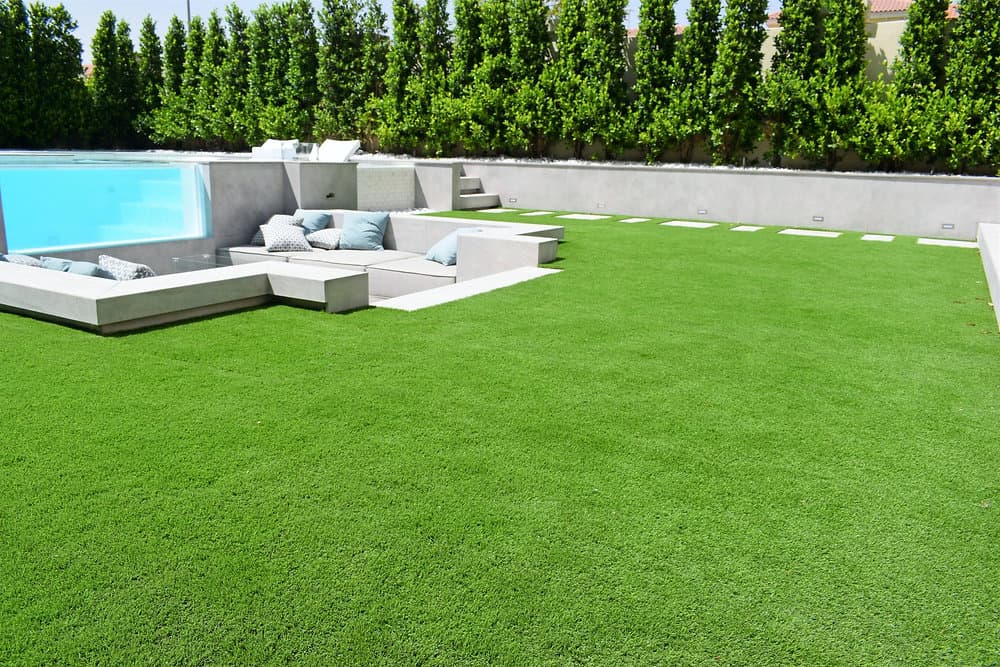
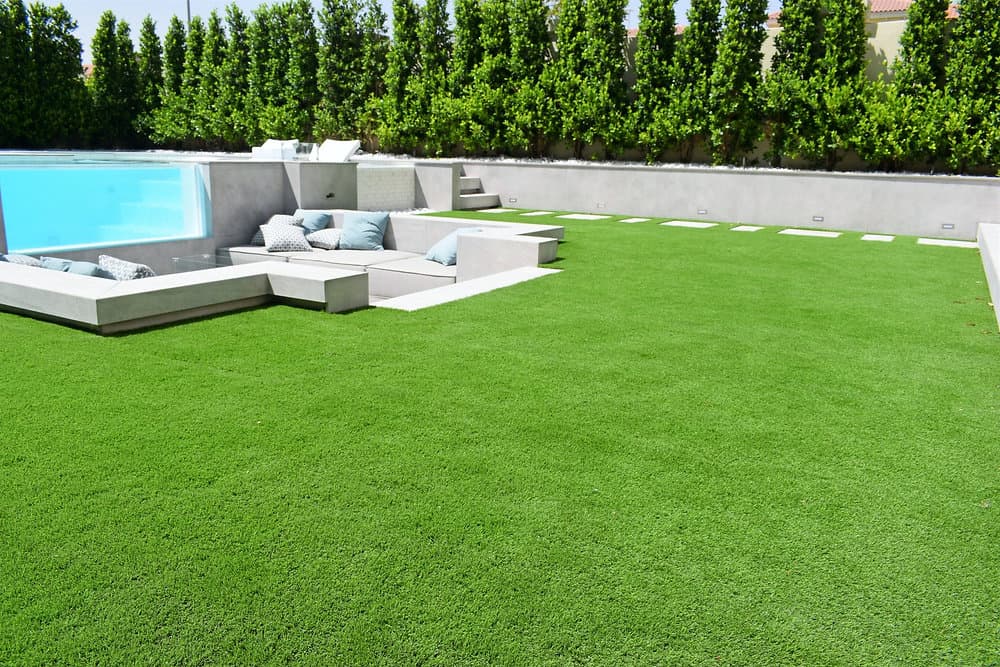
Artificial grass vs natural grass in Dubai comes down to water and time. For most villa gardens, artificial grass is the better choice. It stays green through August without a sprinkler, and the only regular job is a brush and a rinse.
Natural grass still wins on one thing: it's cooler underfoot in summer. If that matters more to you than the water and your weekends, keep it. I'll say below exactly who should.
Does Dubai have natural grass, and can you grow it at home?
Yes. The golf courses, the parks and plenty of villa gardens in Dubai are real grass. It grows because somebody waters it every day.
There's no soil in the UAE, only sand. Rain won't keep a garden going either. It's irrigation or nothing, and the real question is how much.
Mike Clarke, superintendent of golf at Yas Links in Abu Dhabi, told The National that his team puts down 12 to 16 litres per square metre a day in summer. In winter it's 6 to 8. That's a golf course, run by professionals. If a 100 m² villa garden needed the same, you'd be putting 1,200 to 1,600 litres on it. Every summer day.
Here's the part people don't expect. The grass at Yas is a warm-season paspalum, and it grows most in the hottest months. Heat isn't really what beats natural grass in a Dubai garden. Water is, and the work that comes with it.
Artificial grass vs natural grass: where do they actually differ?
| Artificial grass | Natural grass | |
|---|---|---|
| Water | A hose now and then, to rinse it | Irrigation, daily through summer |
| Bare feet at midday, June to August | Too hot, like your paving | Close to air temperature, if well watered |
| Regular work | A brush and a rinse every few weeks | Mowing, feeding, checking the irrigation |
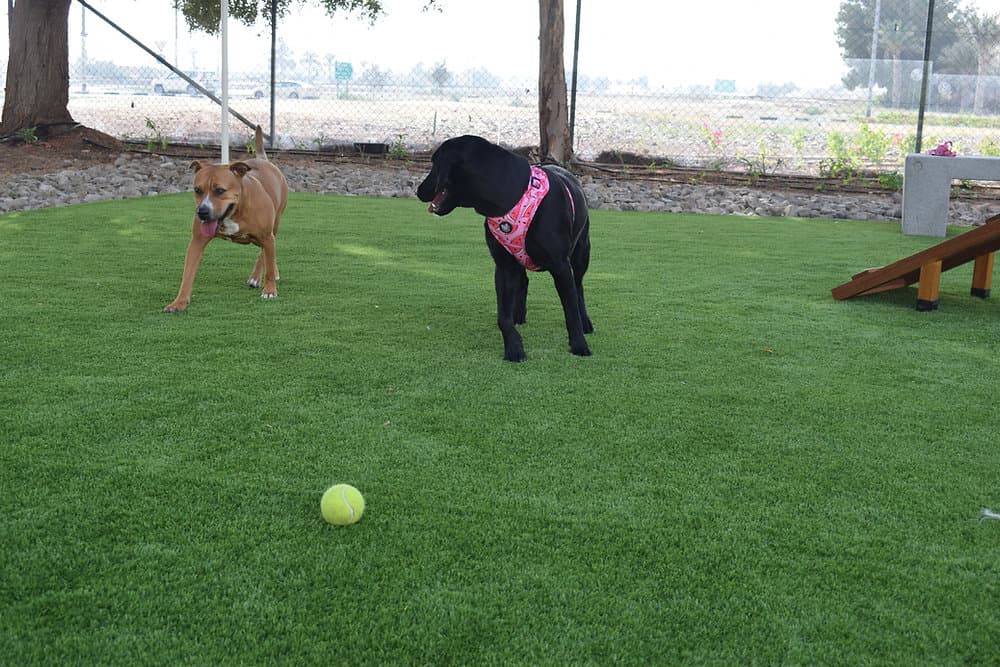
| Kids and dogs | No mud, no bald patch in front of the goal | Wears thin where people walk and play |
| How long it lasts | At least 10 years, then it's replaced | As long as you keep watering and feeding it |
I won't put prices in a blog post. What I will say is that the two spend your money differently. Artificial grass is mostly paid for on the day it goes in. Natural grass keeps billing you, in water and in upkeep, for as long as you have it.
Which copes better with a hot climate?
If you're asking about artificial grass for hot climates, there are really two questions. Will it survive the heat? And can you live with it in the heat?
It'll survive. Heat doesn't break artificial grass down. UV does, and that's settled at the factory: either the fibres were UV stabilised or they weren't. The Maze Grass landscaping range carries a 10-year manufacturer's warranty.
Living with it is where I'll be straight. For three months, June to August, it's too hot for bare feet at midday. So is the paving. Once the afternoon shade reaches it, the grass cools fast, and a hose takes the heat out in seconds. The longer answer, with what cools it and what doesn't, is in our post on how hot artificial grass gets in a Dubai summer.
Well-watered natural grass stays near air temperature, because it's giving water off all day. That's its one real advantage over artificial grass. You pay in litres.
Should you choose artificial or natural grass?
Choose natural grass if:
- you want the coolest surface for bare feet in July
- you've got an irrigation system that works and a gardener who turns up
- you love the smell of cut grass and don't mind the water bill
- the garden is mostly for looking at, not playing on
Those are the cases where natural grass can make sense on paper. In practice, I wouldn't advise a customer in Dubai to keep it. It's too difficult to look after here, and it needs a great deal of water.
Choose artificial grass if:
- the kids and the dog are out there every day. Every grade we sell is pet friendly, so the dog won't decide which grass you pick.
- you're away for part of the summer. The sprinklers don't take August off, even if you do.
- you'd rather spend Saturday sitting in the garden than working on it
- you want the garden to look the same in August as it did in March
Lawn alternatives in Dubai: what if neither is right?
Sometimes the honest answer is neither. A small courtyard that's all seating? Tile it. A side passage nobody walks down doesn't need grass of any kind.
Paving has two drawbacks you should weigh. There's nowhere soft for a child to fall, and stone holds its heat well into the evening, long after the grass beside it has cooled.
You don't always have to choose, either. If you've already got tiles or concrete down and you want something softer, we can often install over them. The detail's in our guide to putting artificial grass over existing tiles and concrete.
What would I do in my own garden?
I'd put artificial grass on the part that gets used and keep the planting real around it. Then I'd spend proper money on shade over the seating, because shade does more for summer comfort than anything you can put on the ground.
Taking out natural grass is a bigger job than people assume. It's full ground preparation. The old grass comes out, a black sand base of 7 to 10 cm goes in, levelled and compacted, and a gluing edge goes round the perimeter. Our guide to ground preparation for artificial grass explains why the starting surface decides the work.
A typical garden we're asked to replace: natural grass burnt brown across most of it, with green left only in a strip along the beds.
If the garden gets used every day, I'd go artificial.
If you'd like a second opinion on your own garden, book a site survey and one of our team will come and look at what's growing there now.
Stephen Pickering has worked for Maze for over three years and is highly knowledgeable about grass product specifications and product quality. He has over 20 years' experience in sales and product roles in the UK and the Middle East.